Mass Spectrometry Testing Explained
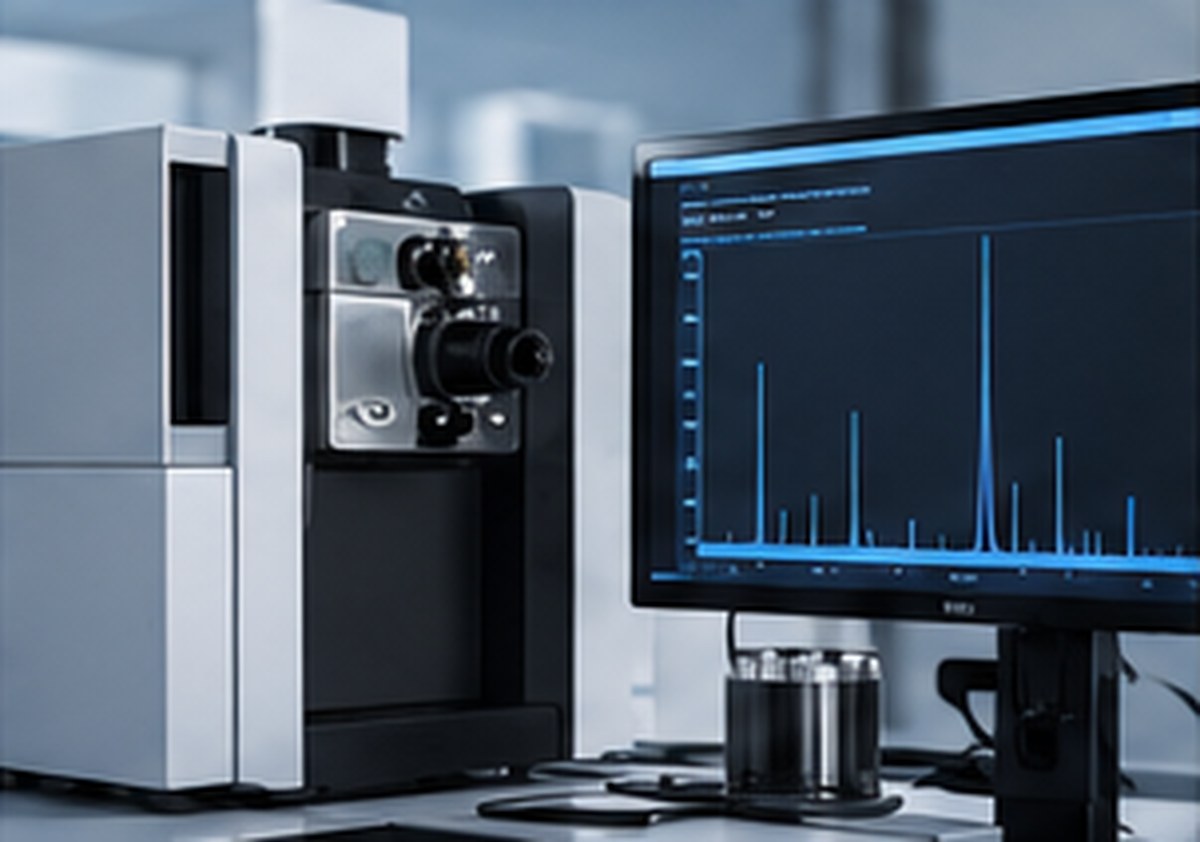
Mass spectrometry measures the mass-to-charge ratio of ions and is the primary tool for confirming that a peptide has the expected molecular weight.
Last reviewed:
Introduction
HPLC tells you how many components are present; mass spectrometry (MS) helps tell you what they are. Together they form the core of peptide characterization.
What Is Mass Spectrometry?
MS converts molecules into gas-phase ions, separates them by mass-to-charge ratio (m/z), and detects them. For peptides, the observed mass is compared with the theoretical mass calculated from the sequence.
Ionization Methods
Electrospray ionization (ESI)
Produces multiply charged ions ([M+nH]ⁿ⁺) from solution; easily coupled to HPLC (LC-MS). The software deconvolutes charge states to calculate intact mass.
MALDI
Matrix-assisted laser desorption ionization usually produces singly charged ions ([M+H]⁺) and is common for rapid mass confirmation.
Reading Mass Spectrometry Results
- Monoisotopic vs average mass — COAs should state which is reported.
- Charge states — a 3,000 Da peptide at +3 appears near m/z 1001.
- Adducts — sodium (+22 Da), potassium (+38 Da) or metal complexes shift observed mass.
- Modifications — oxidation adds 16 Da; deamidation adds ~1 Da.
MS and HPLC Together
LC-MS assigns a mass to each chromatographic peak, confirming that the main HPLC peak is the target and helping identify impurities. Tandem MS (MS/MS) fragments the peptide to confirm sequence.
Limitations
Correct intact mass does not prove correct sequence order or stereochemistry, and MS is not inherently quantitative without calibration. It confirms identity; it does not measure purity on its own.
Frequently Asked Questions
Does a matching mass prove the sequence is correct?
Not by itself. Isomeric sequences share a mass; MS/MS fragmentation or peptide mapping confirms order.
Why do some spectra show several peaks for one peptide?
ESI produces multiple charge states, and adducts or isotopes add further peaks.
What is LC-MS?
Liquid chromatography coupled to mass spectrometry, which provides a mass for each separated component.
Scientific References
- United States Pharmacopeia. General Chapter <736> Mass Spectrometry. [Compendial standard] View source (opens in new tab)
- International Council for Harmonisation. ICH Q6B: Specifications for Biotechnological/Biological Products. 1999. [Standards guidance] View source (opens in new tab)
Related Research
HPLC Testing Explained
How reverse-phase HPLC separates peptides, how to read a chromatogram, and what makes a purity method reliable.
Learn More: HPLC Testing Explained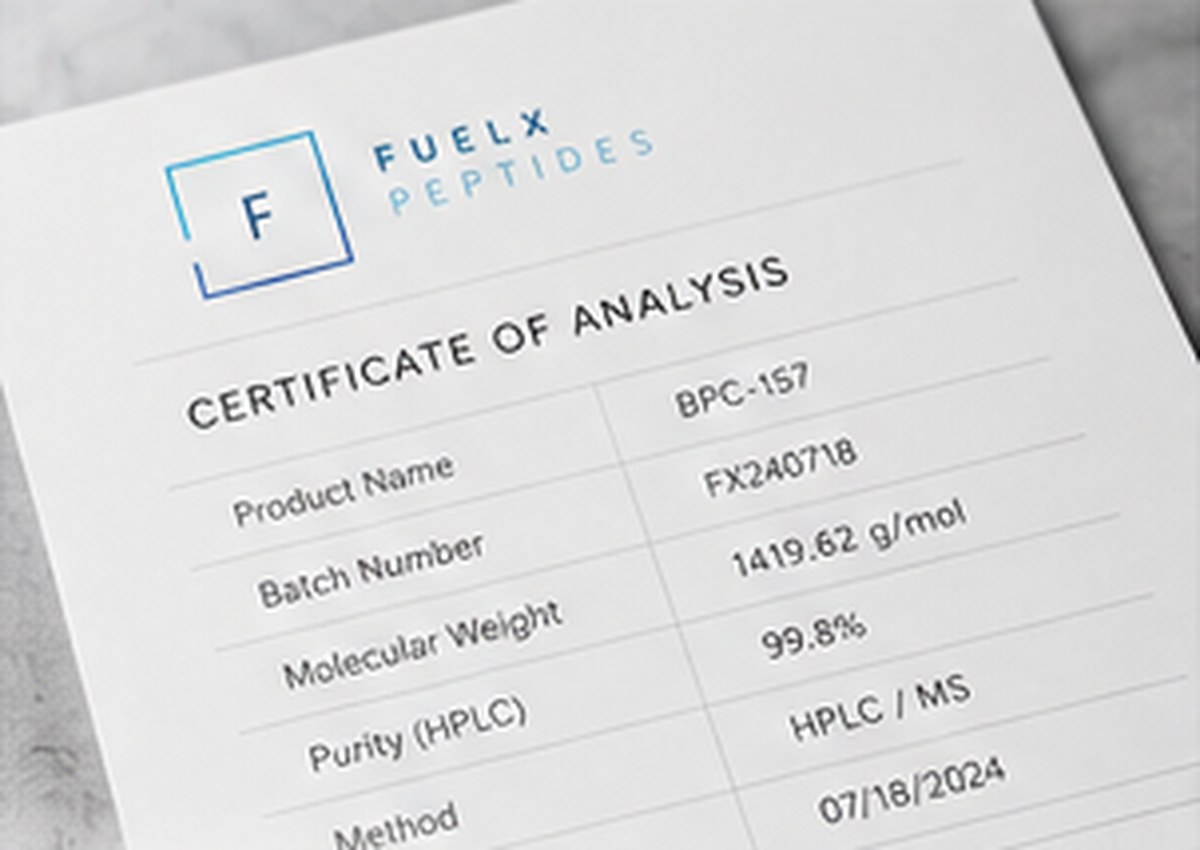
How to Read a Peptide COA
A section-by-section walkthrough of a peptide Certificate of Analysis: identifiers, specifications, results, methods and what a COA cannot tell you.
Learn More: How to Read a Peptide COA
What Does Peptide Purity Mean?
What a purity percentage actually measures, which impurities it captures, and which it does not.
Learn More: What Does Peptide Purity Mean?Continue Your Research
Read our testing standards to see how each compound is verified.