How to Read a Peptide COA
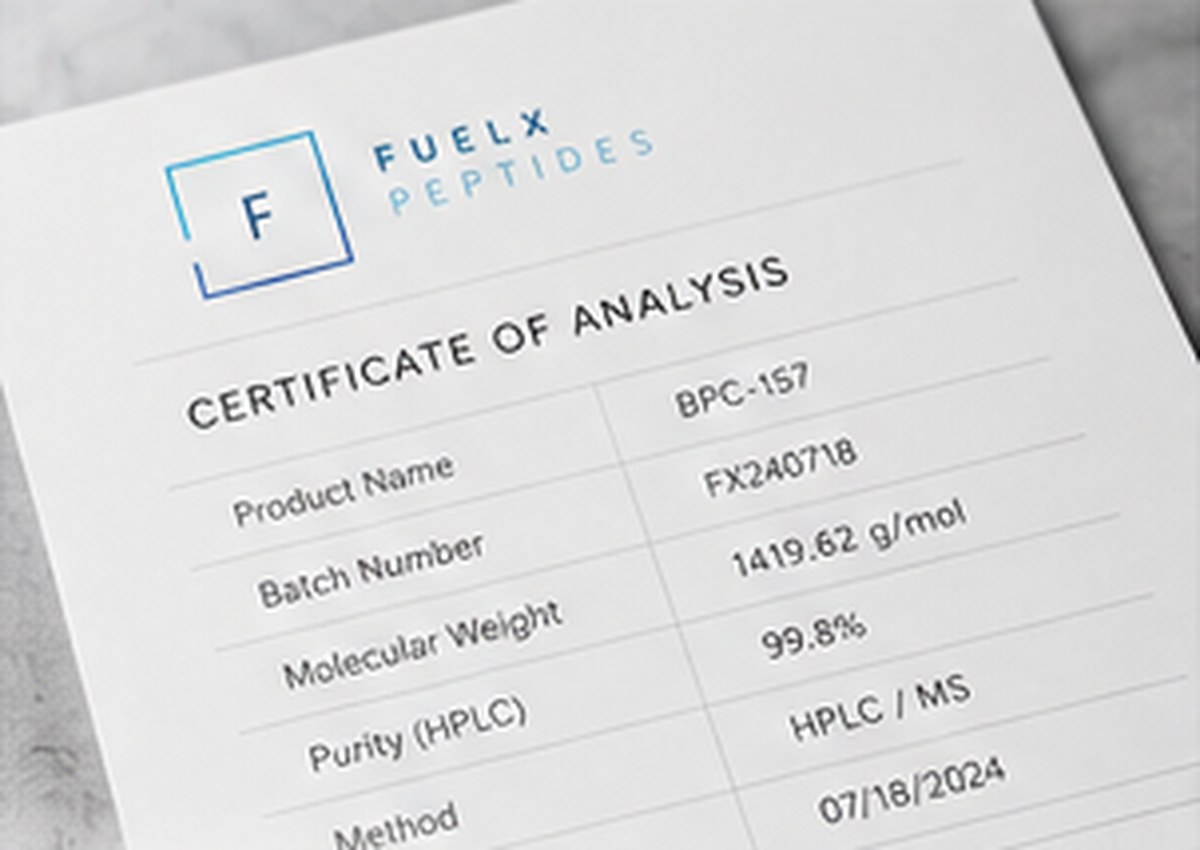
A Certificate of Analysis (COA) summarizes the tests performed on a specific lot of material. Knowing how to read one helps researchers judge whether documentation matches the sample in hand.
Last reviewed:
Introduction
A COA is the primary document connecting a vial of research material to the analytical data behind it. Reading it critically is one of the most practical skills in peptide research: a well-constructed COA makes results traceable, while an incomplete one leaves important questions unanswered.
What Is a Certificate of Analysis?
A COA is a document issued for a specific production lot that lists the tests performed, the acceptance criteria (specification) for each test, the results obtained, and the date and responsible party. It is lot-specific: it describes one batch, not the product in general.
The Sections of a Peptide COA
1. Identifiers
Product name, sequence or structure, molecular formula and weight, lot (batch) number, manufacture or test date, and sometimes a retest date. The lot number on the COA must match the label on the vial.
2. Appearance
Typically "white to off-white lyophilized powder." A simple but useful check of the physical sample.
3. Identity
Usually by mass spectrometry: the observed mass should match the theoretical mass within the stated tolerance. Some COAs add amino acid analysis or peptide mapping.
4. Purity
Usually by reverse-phase HPLC, reported as a percentage of total peak area at a stated wavelength. See What Does Peptide Purity Mean? for how to interpret this number.
5. Content and composition
Some COAs report water content (e.g., Karl Fischer), counter-ion content (acetate or TFA), or net peptide content. These determine how much actual peptide is present — see Peptide Purity vs Quantity.
6. Other tests
Depending on the material and specification, results may include residual solvents, endotoxin or sterility testing, or microbial limits. Absence of a test means it was not reported, not that the result was favorable.
Specification vs Result
Every test should show both the acceptance criterion (e.g., "≥99.0%") and the actual result (e.g., "99.4%"). A COA that lists only "Pass" gives less information than one that reports numerical values.
Checklist for Reviewing a COA
- Does the lot number match the vial?
- Are test methods named (e.g., RP-HPLC, ESI-MS)?
- Are specifications and numerical results both shown?
- Does observed mass match theoretical mass?
- Is the chromatogram or spectrum available on request?
- Is the test date reasonable relative to the lot?
- Is the issuing laboratory identified?
Limitations of a COA
A COA reports results for the tested sample under the stated methods. It does not establish that a material is safe, sterile or suitable for any use beyond what was tested, and it cannot account for changes that occur after testing, such as improper storage.
Frequently Asked Questions
Does high HPLC purity mean the vial contains the labeled amount?
Not necessarily. Purity describes the proportion of target peptide among UV-absorbing components; quantity depends on net peptide content and fill accuracy.
What if a test is not listed on the COA?
Then no result is being reported for it. It should not be assumed that the material would meet that test.
Should the chromatogram be included?
Raw chromatograms and spectra add transparency and let reviewers verify integration and mass assignments.
Scientific References
- International Council for Harmonisation. ICH Q6B: Specifications — Test Procedures and Acceptance Criteria for Biotechnological/Biological Products. 1999. [Standards guidance] View source (opens in new tab)
- International Council for Harmonisation. ICH Q2(R2): Validation of Analytical Procedures. 2023. [Standards guidance] View source (opens in new tab)
- U.S. FDA. ANDAs for Certain Highly Purified Synthetic Peptide Drug Products That Refer to Listed Drugs of rDNA Origin: Guidance for Industry. 2021. [Regulatory guidance] View source (opens in new tab)
Related Research
What Does Peptide Purity Mean?
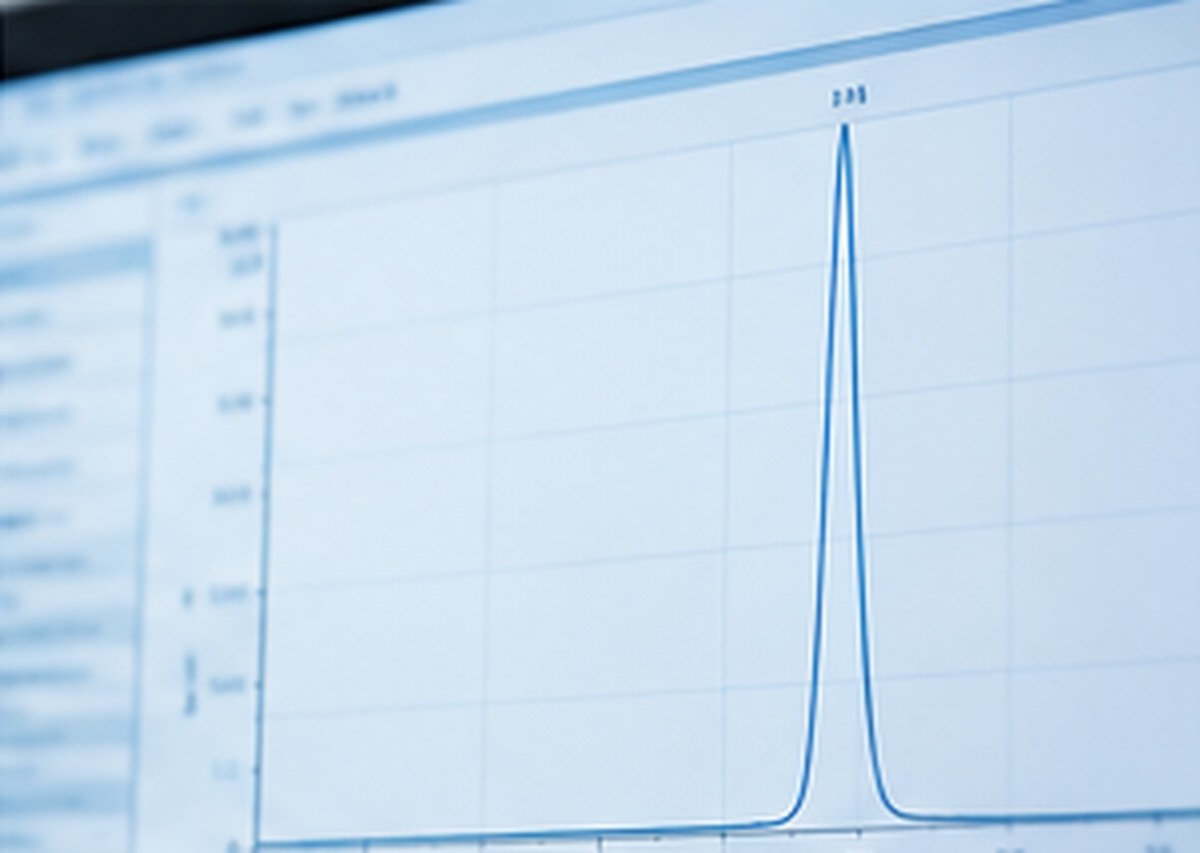
What a purity percentage actually measures, which impurities it captures, and which it does not.
Learn More: What Does Peptide Purity Mean?
HPLC Testing Explained
How reverse-phase HPLC separates peptides, how to read a chromatogram, and what makes a purity method reliable.
Learn More: HPLC Testing Explained
Mass Spectrometry Testing Explained
How mass spectrometry confirms peptide identity, what m/z and charge states mean, and how MS complements HPLC.
Learn More: Mass Spectrometry Testing ExplainedContinue Your Research
Read our testing standards to see how each compound is verified.