What Does Peptide Purity Mean?
Peptide purity usually refers to chromatographic purity: the percentage of UV-absorbing material that is the target peptide. This article explains what that number includes and excludes.
Last reviewed:
Introduction
"≥99% purity" is one of the most common statements in peptide documentation, but it is often misunderstood. Purity is a specific analytical measurement with a defined scope, and it answers a narrower question than many readers assume.
What Is Peptide Purity?
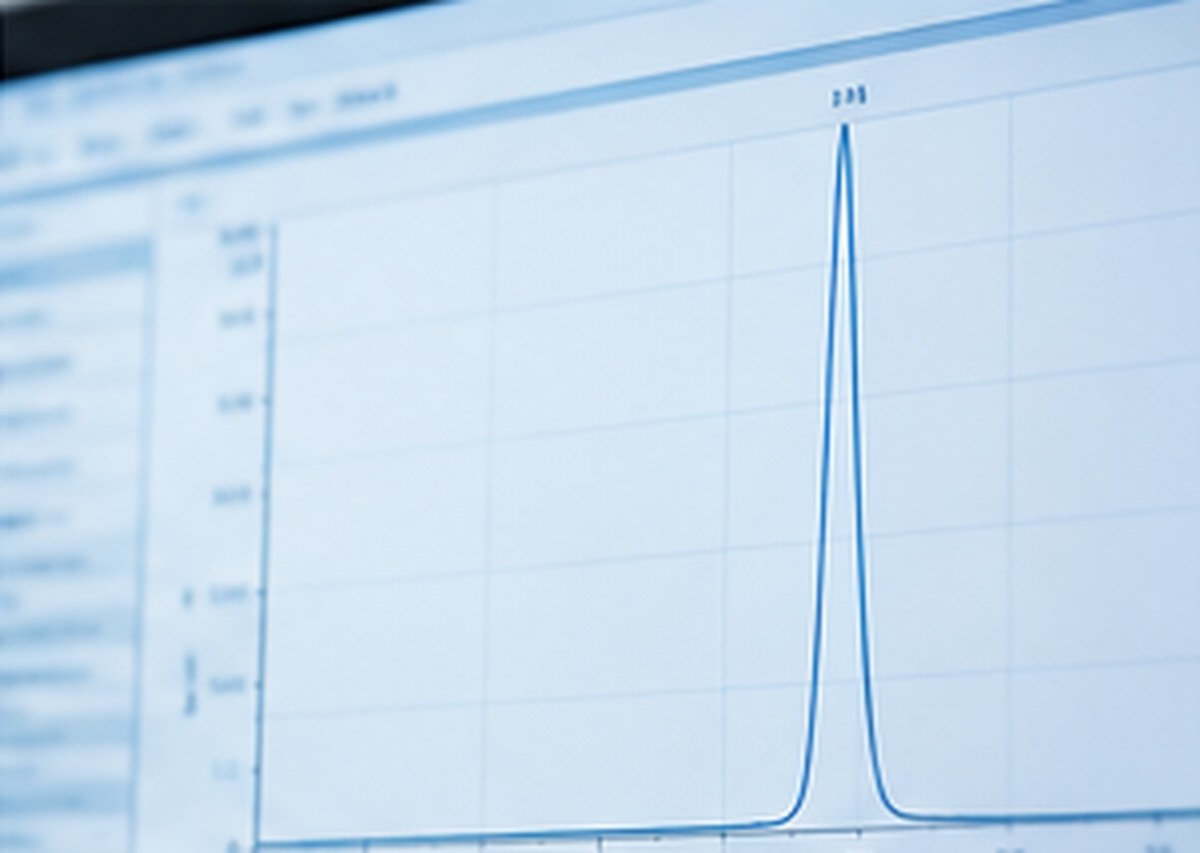
In most peptide COAs, purity means chromatographic purity by reverse-phase HPLC with UV detection (commonly 214–220 nm, where peptide bonds absorb). It is calculated as the area of the main peak divided by the total area of all integrated peaks, expressed as a percentage.
What Impurities Does It Capture?
Solid-phase peptide synthesis produces related impurities that are chemically similar to the target peptide:
- Deletion sequences — missing one or more amino acids.
- Truncated sequences — synthesis stopped early.
- Incompletely deprotected sequences — protecting groups remain.
- Oxidation products — e.g., methionine sulfoxide (+16 Da).
- Racemized or isomerized residues — e.g., aspartimide-related products.
Most of these absorb UV and are resolved chromatographically, so they are reflected in the purity result — provided the method separates them from the main peak.
What Purity Does Not Capture
- Water, which does not absorb at the detection wavelength.
- Counter-ions such as acetate or trifluoroacetate (TFA).
- Inorganic salts.
- Impurities that co-elute with the main peak.
- Microbial or endotoxin contamination — see Sterility vs Endotoxin Testing.
This is why purity and quantity are different measurements. See Peptide Purity vs Quantity.
Why Method Matters
A purity figure is only as meaningful as the method behind it. Column chemistry, gradient, wavelength and integration settings all affect the result. A method that fails to separate a closely related impurity will overstate purity. Pairing HPLC with mass spectrometry (LC-MS) helps confirm the main peak is the correct molecule.
Limitations
Purity is a relative measure among detected components. It says nothing about safety, sterility or biological activity, and results apply only to the tested lot.
Frequently Asked Questions
Is 99% purity the same as 99% peptide by weight?
No. Purity is a chromatographic ratio of UV-absorbing peaks; weight content also includes water and counter-ions.
Why is 214–220 nm commonly used?
Peptide bonds absorb strongly in this range, so nearly all peptide species are detected.
Can two labs report different purity for the same lot?
Yes, if their methods differ in resolution or integration. Comparing methods is essential.
Scientific References
- United States Pharmacopeia. General Chapter <621> Chromatography. [Compendial standard] View source (opens in new tab)
- U.S. FDA. ANDAs for Certain Highly Purified Synthetic Peptide Drug Products That Refer to Listed Drugs of rDNA Origin: Guidance for Industry. 2021. [Regulatory guidance] View source (opens in new tab)
- International Council for Harmonisation. ICH Q2(R2): Validation of Analytical Procedures. 2023. [Standards guidance] View source (opens in new tab)
Related Research
HPLC Testing Explained
How reverse-phase HPLC separates peptides, how to read a chromatogram, and what makes a purity method reliable.
Learn More: HPLC Testing Explained
Peptide Purity vs Quantity
Why a 99%-pure peptide can still contain less peptide than the gross weight suggests — and how net peptide content is determined.
Learn More: Peptide Purity vs Quantity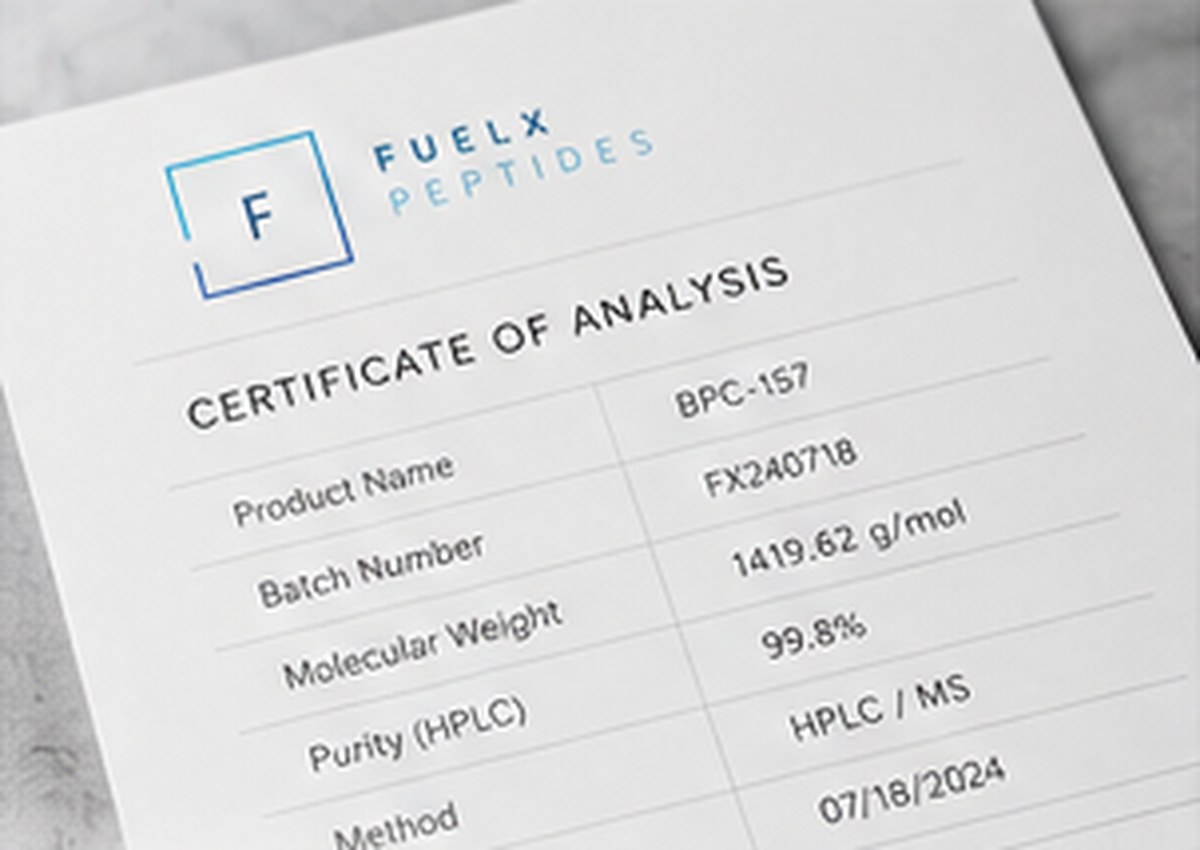
How to Read a Peptide COA
A section-by-section walkthrough of a peptide Certificate of Analysis: identifiers, specifications, results, methods and what a COA cannot tell you.
Learn More: How to Read a Peptide COAContinue Your Research
Read our testing standards to see how each compound is verified.