Sterility Testing vs Endotoxin Testing
Sterility testing looks for viable microorganisms; endotoxin testing measures bacterial cell-wall lipopolysaccharide. They answer different questions and use different methods.
Last reviewed:
Introduction
Sterility and endotoxin results are sometimes treated as interchangeable. They are not. A sample can be sterile yet contain endotoxin, because endotoxin persists after bacteria are killed.
This is general laboratory education. FuelX Peptides does not represent that its research products are sterile, pyrogen-free or endotoxin-free unless a specific written specification states otherwise.
What Is Sterility Testing?
Sterility testing (USP <71>) determines whether viable bacteria or fungi are present. The sample is filtered or directly inoculated into growth media and incubated (typically 14 days). Growth indicates a non-sterile sample. The test is statistical and has limited ability to detect low-level contamination.
What Is Endotoxin Testing?
Endotoxins are lipopolysaccharides from the outer membrane of Gram-negative bacteria. The bacterial endotoxin test (USP <85>) uses Limulus amebocyte lysate (LAL), which reacts with endotoxin by gel-clot, turbidimetric or chromogenic methods. Results are reported in endotoxin units (EU). Recombinant factor C assays are an alternative.
Key Differences
- Target — sterility: living microorganisms; endotoxin: a bacterial molecule.
- Result — sterility: growth/no growth; endotoxin: quantitative EU value.
- Time — sterility: ~14 days; endotoxin: hours.
- Relationship — killing bacteria can release endotoxin, so sterility does not imply low endotoxin.
Relevance to In Vitro Research
Endotoxin can activate immune signaling (e.g., TLR4) in cell cultures and confound results, particularly in inflammation-related assays. Researchers running such assays may choose to verify endotoxin levels or include appropriate controls. See also How to Read a Peptide COA.
Limitations
Neither test characterizes chemical identity or purity. Peptides can interfere with LAL assays, requiring inhibition/enhancement controls. Results apply only to the tested sample.
Frequently Asked Questions
Can a sterile sample contain endotoxin?
Yes. Endotoxin is a molecule that remains after bacteria are killed.
What does LAL stand for?
Limulus amebocyte lysate, derived from horseshoe crab blood cells, which clots in the presence of endotoxin.
Why might endotoxin matter in cell-culture research?
It can activate innate immune signaling in cultured cells and confound experimental readouts.
Scientific References
- United States Pharmacopeia. General Chapter <71> Sterility Tests. [Compendial standard] View source (opens in new tab)
- United States Pharmacopeia. General Chapter <85> Bacterial Endotoxins Test. [Compendial standard] View source (opens in new tab)
- U.S. FDA. Guidance for Industry: Pyrogen and Endotoxins Testing — Questions and Answers. 2012. [Regulatory guidance] View source (opens in new tab)
Related Research
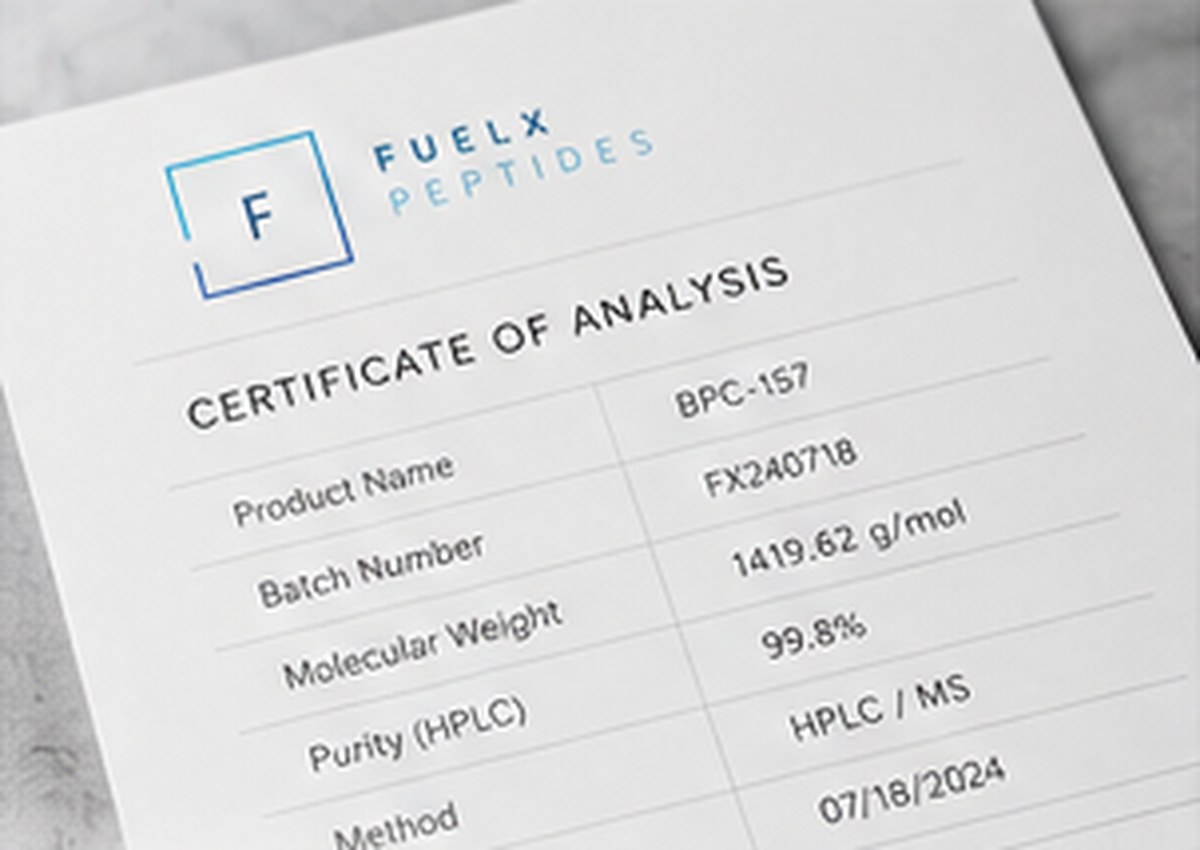
How to Read a Peptide COA
A section-by-section walkthrough of a peptide Certificate of Analysis: identifiers, specifications, results, methods and what a COA cannot tell you.
Learn More: How to Read a Peptide COA
How Lyophilized Peptides Are Tested
An overview of freeze-drying and the analytical panel commonly applied to lyophilized peptide powders, from appearance to moisture and identity.
Learn More: How Lyophilized Peptides Are Tested
What Does Peptide Purity Mean?
What a purity percentage actually measures, which impurities it captures, and which it does not.
Learn More: What Does Peptide Purity Mean?Continue Your Research
Read our testing standards to see how each compound is verified.