How Lyophilized Peptides Are Tested
Lyophilization removes water to improve peptide stability. This article outlines the process and the tests typically used to characterize the resulting powder.
Last reviewed:
Introduction
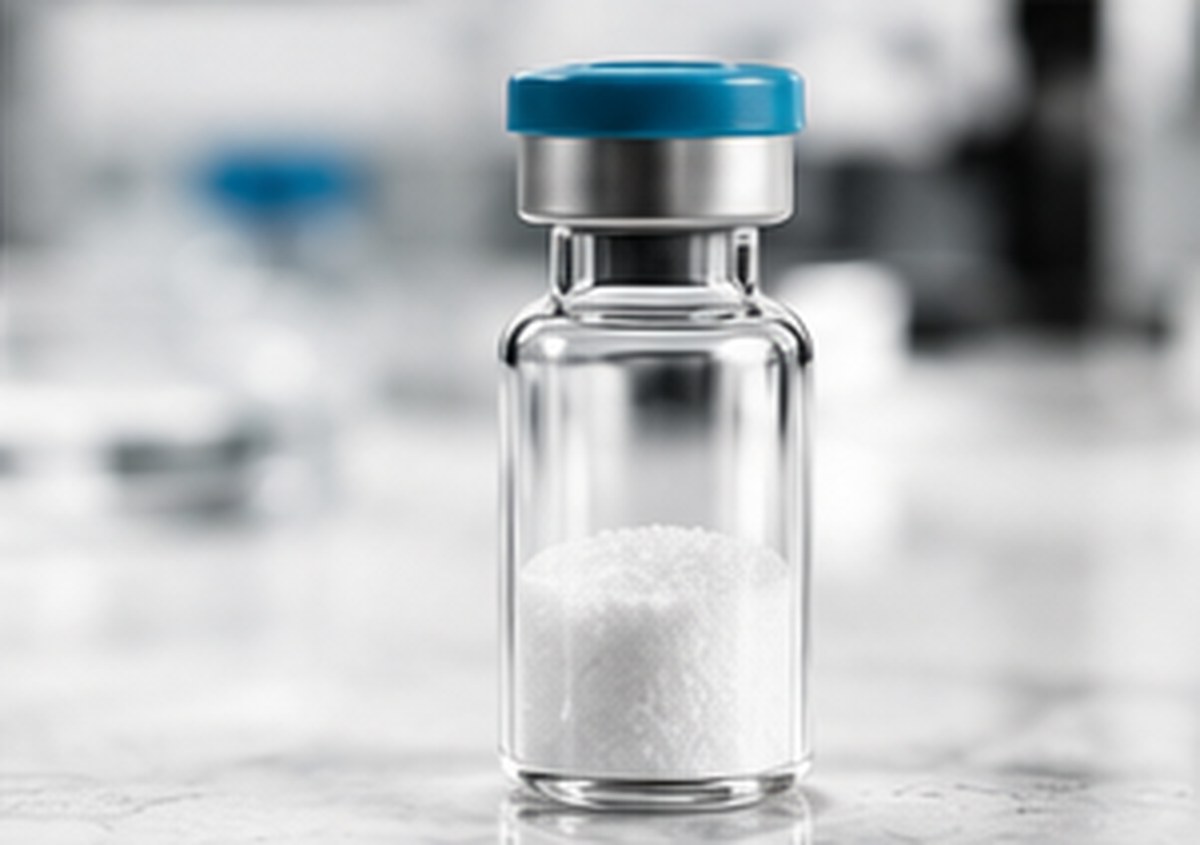
Most research peptides are supplied as lyophilized powders because removing water slows hydrolysis and other degradation reactions. The powder is then characterized with a panel of complementary tests.
What Is Lyophilization?
Lyophilization (freeze-drying) has three stages: freezing the solution, primary drying (sublimation of ice under vacuum), and secondary drying (desorption of bound water). The result is a porous, low-moisture solid often called a cake.
Typical Analytical Panel
Appearance
Visual inspection of color and cake form. Collapse or discoloration can indicate process or storage problems.
Identity
Mass spectrometry confirms molecular mass.
Purity
HPLC measures chromatographic purity and detects degradation products.
Water content
Karl Fischer titration (USP <921>) quantifies residual moisture, which influences stability.
Counter-ion and content
Ion chromatography or other methods quantify TFA or acetate; amino acid analysis gives net peptide content. See Peptide Purity vs Quantity.
Microbiological tests, when specified
Some specifications include endotoxin or sterility testing; many research-grade specifications do not.
Stability Considerations
Lyophilized peptides are generally more stable than solutions but remain sensitive to moisture, heat and light. Oxidation-prone residues (Met, Cys, Trp) and deamidation-prone sequences (Asn-Gly) are common degradation sites. Storage under controlled conditions and minimizing moisture exposure help preserve the characterized state.
Limitations
Test results describe the lot at the time of testing. Changes after testing — for example exposure to humidity or heat — are not reflected in the original documentation. See How to Read a Peptide COA.
Frequently Asked Questions
Why are peptides lyophilized?
Removing water slows hydrolysis and other degradation pathways, improving storage stability.
What does Karl Fischer titration measure?
Water content, by a reaction specific to water.
Does lyophilization make a peptide sterile?
No. Freeze-drying removes water; it is not a sterilization process.
Scientific References
- U.S. FDA. Lyophilization of Parenteral (7/93) — Inspection Guide. [Regulatory guidance] View source (opens in new tab)
- United States Pharmacopeia. General Chapter <921> Water Determination. [Compendial standard] View source (opens in new tab)
- International Council for Harmonisation. ICH Q6B: Specifications for Biotechnological/Biological Products. 1999. [Standards guidance] View source (opens in new tab)
Related Research
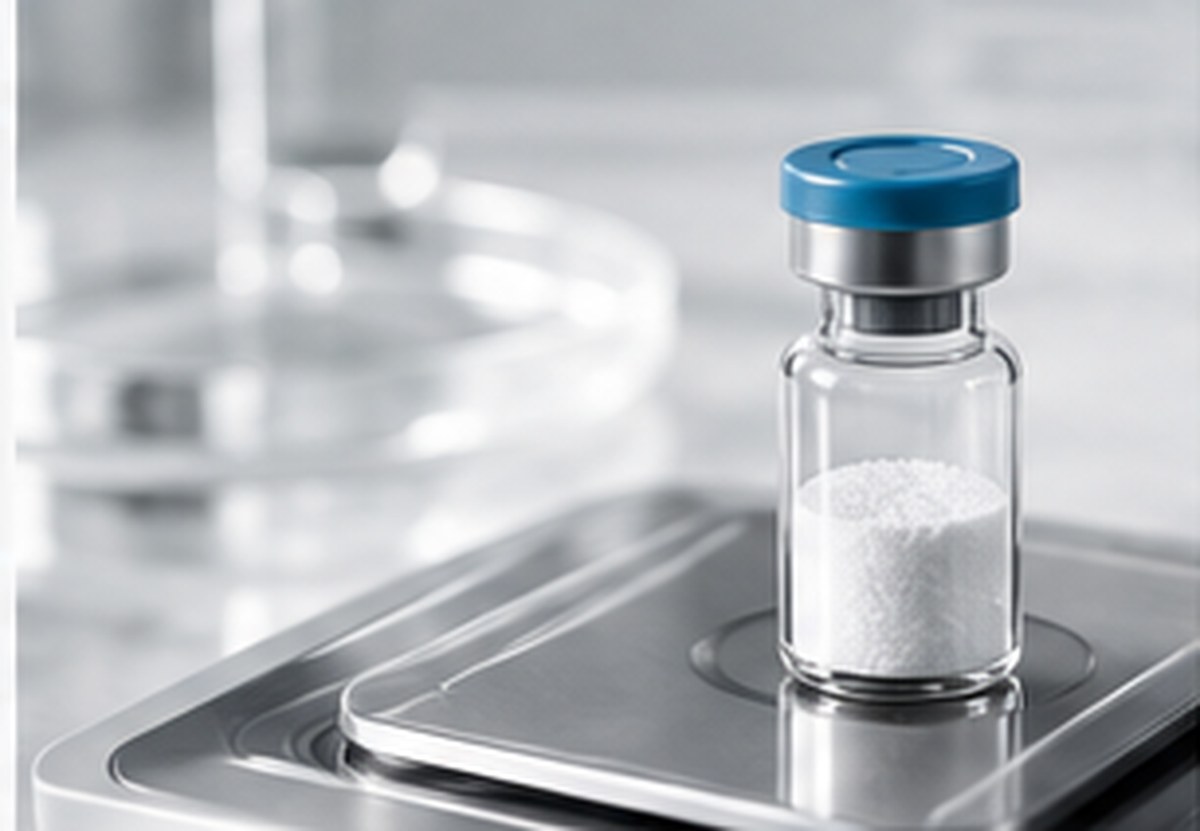
Peptide Purity vs Quantity
Why a 99%-pure peptide can still contain less peptide than the gross weight suggests — and how net peptide content is determined.
Learn More: Peptide Purity vs Quantity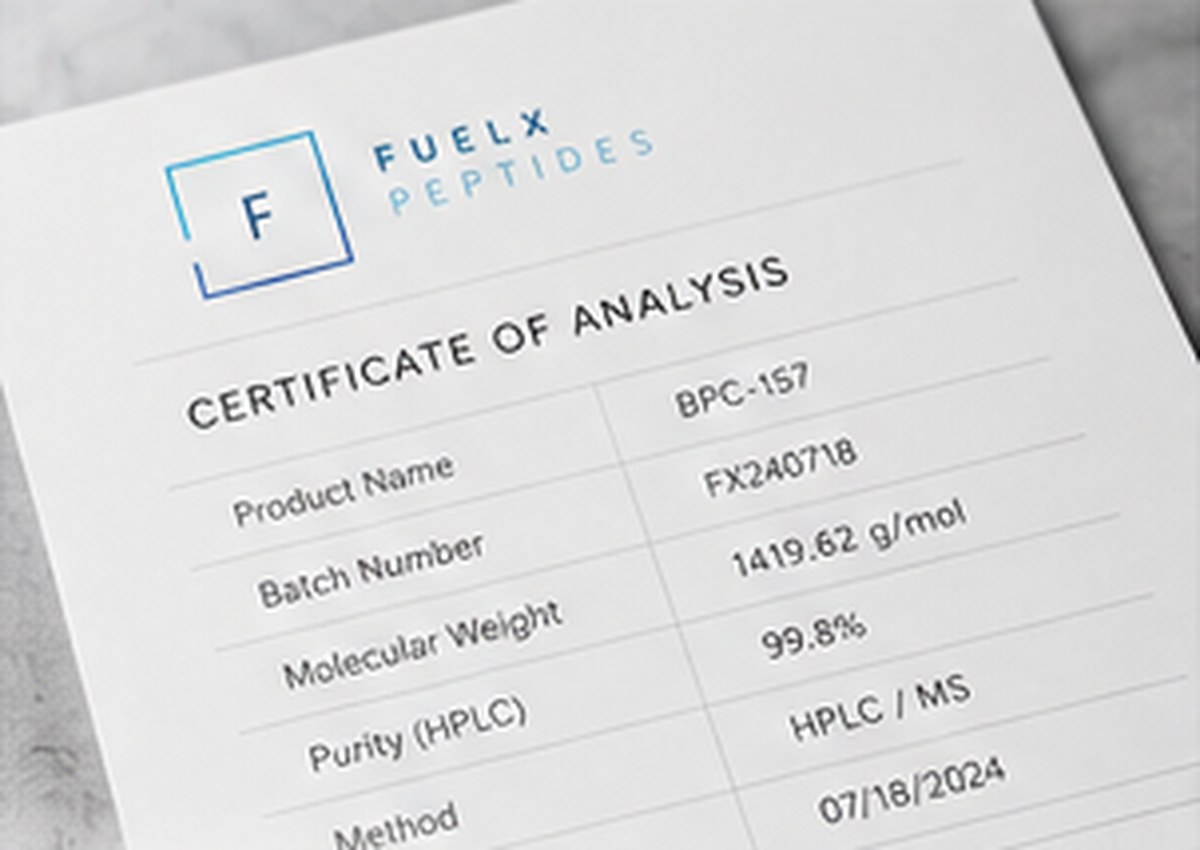
How to Read a Peptide COA
A section-by-section walkthrough of a peptide Certificate of Analysis: identifiers, specifications, results, methods and what a COA cannot tell you.
Learn More: How to Read a Peptide COA
Sterility Testing vs Endotoxin Testing
Two frequently confused microbiological tests: what each detects, how they are performed, and why one never substitutes for the other.
Learn More: Sterility Testing vs Endotoxin TestingContinue Your Research
Read our testing standards to see how each compound is verified.