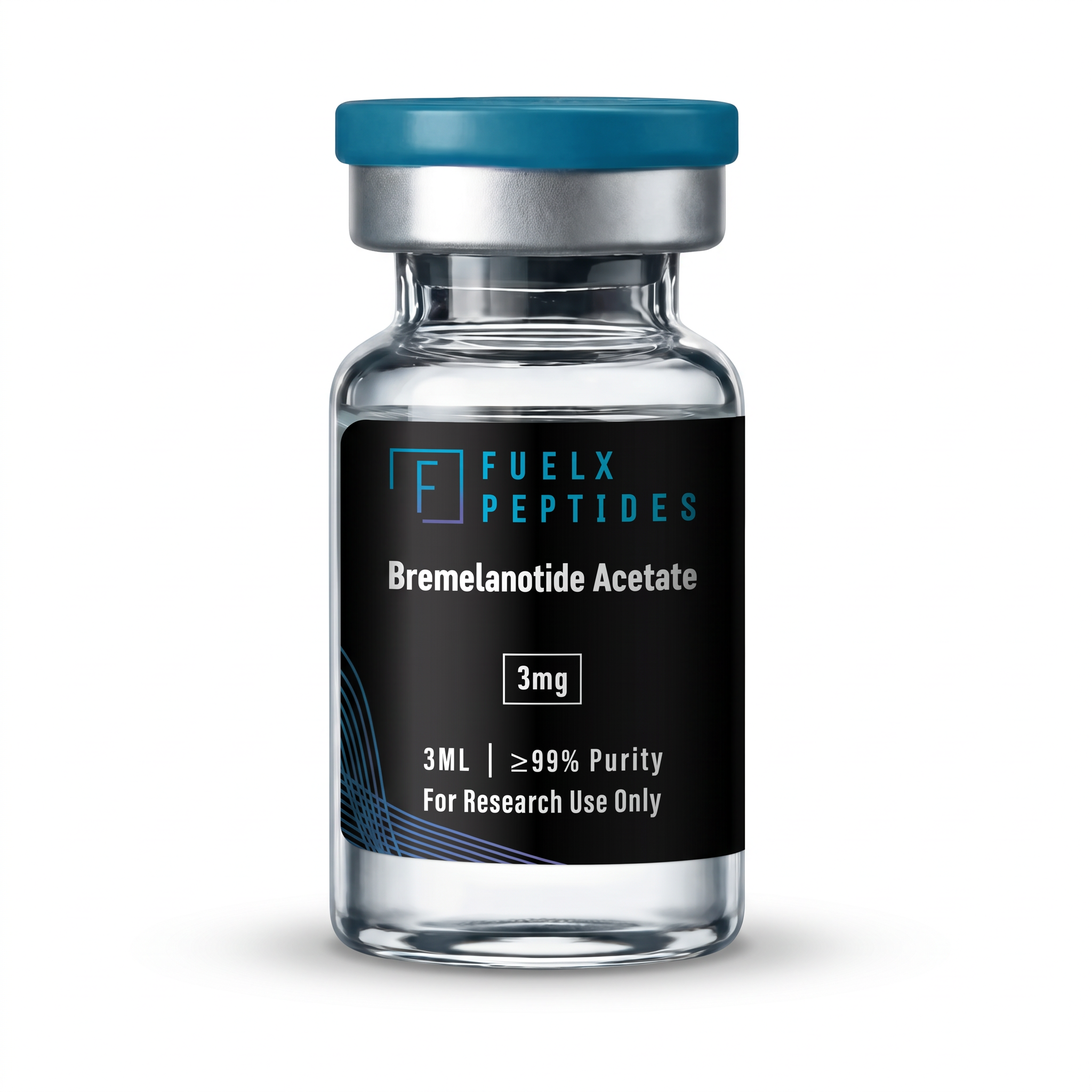
PT-141 (Bremelanotide) Research Peptide
$20.00
A synthetic melanocortin analog researched for its selective interaction with MC3R and MC4R receptors. A common laboratory tool for examining G-protein–coupled receptor (GPCR) activation and central neuroendocrine signaling. For research use only. Not for human consumption.
PT-141 (Bremelanotide) · lyophilized powder research material
For laboratory research use only. Not for human or veterinary use, consumption, or any diagnostic or therapeutic application.
Research Overview
PT-141 is a synthetic research peptide developed from structural modifications of the melanocortin analog Melanotan II. In experimental models, PT-141 has been studied for its selective interaction with melanocortin receptors, particularly MC3R and MC4R, which are involved in central neuropeptide signaling pathways. Preclinical research commonly utilizes PT-141 to examine G-protein–coupled receptor (GPCR) activation, hypothalamic signaling mechanisms, and downstream neuroendocrine modulation. Its receptor selectivity and defined mechanism of action make PT-141 a useful tool for investigating melanocortin system biology and neuronal signaling dynamics in controlled laboratory environments.
Evidence classification: Bremelanotide has controlled clinical research in an FDA-approved pharmaceutical formulation for a specific indication; that evidence does not apply to research-grade material.
Certificate of Analysis
A Certificate of Analysis is available on request for every product, providing clear documentation of independent testing and verified purity.
Request a COA at info@fuelxpeptides.com.
Storage Information
Storage conditions for the unreconstituted lyophilized material are specified in the product label and lot documentation. Refer to that documentation for the applicable temperature and handling conditions; FuelX Peptides stores material under controlled conditions prior to shipment.
Scientific References
- Wessells H, et al. Journal of Urology. 2003;170(2 Pt 1):627–632. Search PubMed (opens in new tab)
- Shadiack AM, et al. Journal of Sexual Medicine. 2007;4(1):95–104. Search PubMed (opens in new tab)
- Hadley ME. Annals of the New York Academy of Sciences. 2006;994:419–430. Search PubMed (opens in new tab)
Related Research
Related Research Compounds
Listed for research navigation only; these compounds are not equivalent and do not produce equivalent effects.
For laboratory research use only. Not for human or veterinary use, consumption, or any diagnostic or therapeutic application.